 Trusted by over 500,000 customers for 20+ years
 Order online or call
01480 775454
Order online or call
01480 775454
 Sign in
Trusted by over 500,000 customers for 20+ years
Order online or call
01480 775454
Sign in
Trusted by over 500,000 customers for 20+ years
Sign in
Trusted by over 500,000 customers for 20+ years
Order online or call
01480 775454
Sign in
Trusted by over 500,000 customers for 20+ years











Written by
Jenna Culy
on 05 Sep 2022
and updated on
13 Jul 2026
Categorised in
Sustainability
Update: 13th July 2026
The UK Government has announced that, from 21st July 2026, the Boiler Upgrade Scheme (BUS) grant will increase by 20%, with the maximum grant rising from £7,500 to £9,000. The increase is designed to make low-carbon heating systems, such as heat pumps, more affordable for homeowners looking to replace their existing heating system.
With more homeowners exploring renewable heating options, air source heat pumps have become one of the most popular low-carbon alternatives in the UK.
In this guide, we'll explain what an air source heat pump is, how it works, and the key advantages and disadvantages to consider before making the switch.
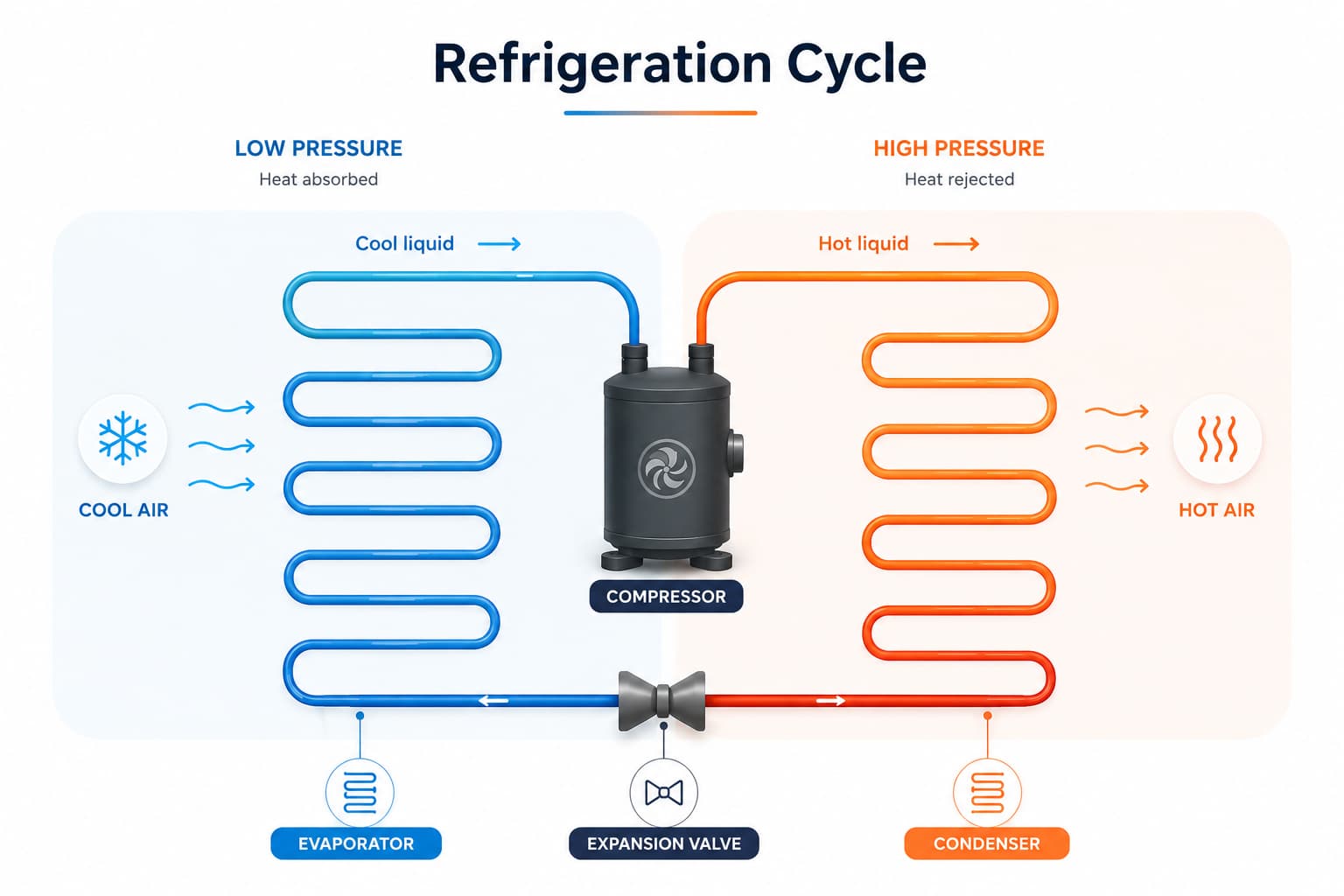
An air source heat pump is a low-carbon heating system that uses energy from the outside air to provide heating and hot water for your home. Even when temperatures are low, the system can extract heat from the air and use it to warm your property.
The heat pump absorbs heat from the outside and transfers it to a refrigerant fluid. This fluid is then compressed, increasing its temperature before the heat is transferred to your home's heating system. The resulting warmth can be used to heat radiators, underfloor heating and hot water, providing an energy-efficient alternative to traditional heating systems.
What's great about an air source heat pump?
Air source heat pumps are an efficient, low-carbon heating solution that can help reduce both your environmental impact and energy bills. As they use renewable heat from the air rather than burning fossil fuels, they can achieve efficiences of up to 400% while providing reliable heating and hot water throughout the year, even in temperatures as low as -15°C.
Homeowners may also be eligible for financial support through government-backed schemes, and with regular maintenance, an air source heat pump can have a lifespan of up to 20 years.
What's not so great about an air source heat pump?
While air source heat pumps offer many benefits, there are some drawbacks to consider. They can produce a low level of noise, comparable to light rainfall, and because they operate at lower temperatures than traditional gas or oil boilers, some homes may require larger radiators or underfloor heating to achieve the desired level of warmth. Their efficiency can also decrease during very cold weather, and for properties already connected to the gas mains, the potential savings on energy bills may be more limited.
Air source heat pumps can offer an energy-efficient, lower-carbon alternative to traditional heating systems, with the potential to reduce running costs in some homes. They can provide heating and hot water year-round and may be eligible for government support schemes.
However, their performance and cost savings can vary depending on the property, insulation levels and existing heating system. Installation costs can be significant, and some homes may require additional upgrades, such as larger radiators or underfloor heating.
Ultimately, whether an air source heat pump is the right choice will depend on your home's requirements, budget and long-term heating goals. It's important to weigh up both benefits and drawbacks before deciding on the most suitable heating solution for your property.



 Price Charts